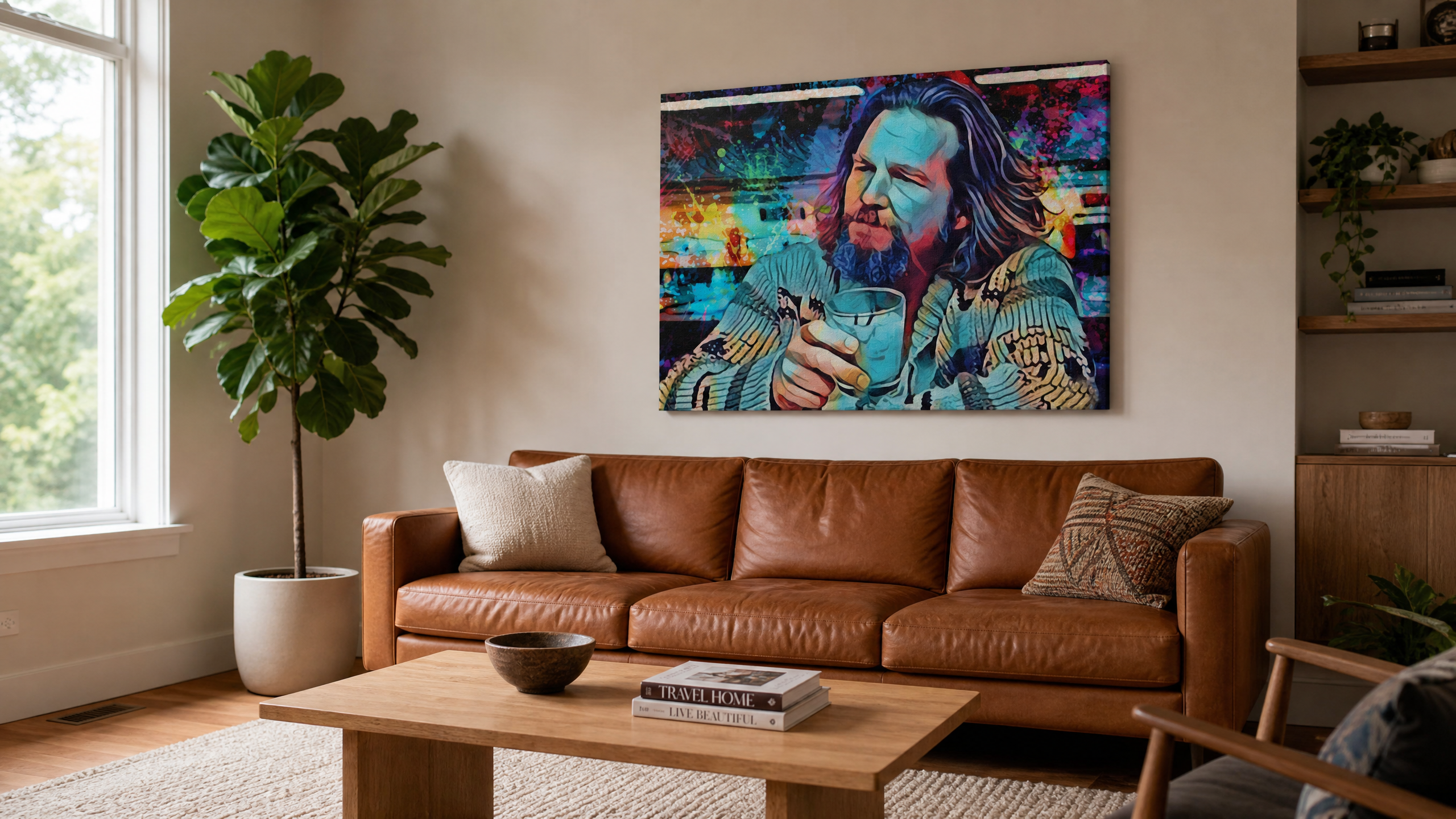
Your golf man cave should look like somewhere you want to hang out. Not the room where your old clubs went to retire.
The best golf wall art for your man cave gives the space a point of view: a little clubhouse calm, a little old-school swagger, or a movie reference your buddies get before they sit down. You don't need every golf thing you own on one wall. You need the right piece, the right size, and enough breathing room to actually enjoy it.
Here are five picks from the LWA golf wall art collection, plus a practical way to work them into your version of the 19th hole.
Start With the Room, Not the Empty Wall
Think about what happens here. Is it a quiet chair and Sunday golf? A bar where everyone relives the same terrible approach shot? A couch, a big screen, and a running argument about who's the greatest?
Pick the mood first. Course art suits a calmer lounge. Player art brings the history. Golf-movie art says the room can take a joke. Make one wall the main event instead of putting competing focal points on every surface.
A piece you genuinely love beats a wall of stuff that merely has golf on it. Yes, even if the stuff was on sale.
1. Augusta National: For the Clubhouse Feel
Augusta National Abstract Wall Art brings vivid greens, tall trees, and a stone bridge into the room. It gives you golf without making the whole space about one player.
Try it over the seating area or a clear console wall. Pull a green or blue from the artwork into one small detail nearby: a cushion, a book, or a rug accent. Let the rest of the room stay quieter.
This is a good direction if you like natural wood, an uncluttered bar, and a room that still feels finished when the TV is off. Augusta on the wall won't get you a tee time. But it does make the chair feel slightly more exclusive.
2. Hogan and Palmer Cig Break: For the Legends Wall
Hogan and Palmer Cig Break Wall Art is the old-school pick. The scene has players, a crowd, and plenty to look at. It's colorful, too—not a plain black-and-white photograph.
Give it a clear wall above a low cabinet or near a reading chair. Dark wood and leather work with the traditional feel; they don't have to turn the room into a museum.
If you're displaying a framed scorecard or a favorite golf book nearby, keep those supporting pieces smaller. The canvas gets the lead role. Your memorabilia doesn't need to audition over it.
3. Arnold Palmer: For a Narrower Wall
Arnold Palmer Wall Art pairs a standing player portrait with a colorful, painterly background. The vertical composition is worth considering for a wall beside a bar, bookcase, or chair where a wide piece would feel squeezed.
Measure that section on its own. Don't buy for the total room width when the actual hanging space is a narrow strip between furniture.
Use it as one portrait statement, or pair it with another piece only if their proportions and spacing make sense together. You don't need a three-player lineup just because three is a nice number.
4. Happy Gilmore: For the Room That Doesn't Take Itself Seriously
Happy Gilmore Wall Art puts Happy down at ball level in a bold, textured close-up. It's an easy conversation starter for the lounge or bar side of the room.
Let the artwork supply the loud part. A simple wall and a consistent frame finish keep the joke from becoming visual chaos. You can love golf movies without making your basement look like a video-store clearance rack.
Put it somewhere guests can enjoy it while they're sitting down—not behind the open door or wedged between a TV and a stack of speakers. Just tap it into the right spot.
5. Tin Cup Final Hole: For the Guy Who Still Goes for It
Tin Cup Final Hole Wall Art has Roy holding up a ball, with his caddie beside him and a colorful crowd behind them. The movie reference does the talking.
This is a natural pick near a social seating area, especially if your golf group has strong opinions about laying up. Give it enough space that the scene reads from across the room.
If you already have a bright Happy Gilmore piece, don't assume both need to share the same wall. Put one near the bar and one in another clear zone, or choose the movie you actually quote most. We're not judging. Your playing partners might.
Choose the Size Before You Choose the Nail
Measure the usable wall, including nearby doors, shelves, speakers, and lamps. Then outline the size you're considering with painter's tape. Sit in the usual chair and look at it from the doorway. Both views matter.
Several horizontal picks above offer sizes such as 24 × 18, 32 × 24, and 40 × 30 inches. Those are different choices—not a universal instruction to go huge. Check the exact product, format, and selected size before ordering.
Above furniture, center the piece on the furniture grouping rather than blindly centering it on the entire wall. Leave a visible gap above the sofa or cabinet. A high chair back shouldn't cover the bottom of your new canvas.
A comfortable eye-level starting point is more useful than hanging everything near the ceiling. Adjust for the room and the furniture. The goal is a piece that belongs there, not one that looks like it wandered up the wall.
Canvas, Framed Canvas, or Framed Print?
LWA's canvas listings describe printed canvas stretched over a wood support. A gallery wrap gives the artwork a clean, frame-free edge. A framed canvas adds a defined border around that canvas.
A framed print is a different format. The product descriptions specify matte photo paper, a thick white border overlay, a wood frame, and an acrylic shield. That white border changes how the artwork sits in the room.
Choose the look you want, then check the available configuration on the individual listing. A framed print isn't automatically better than canvas, and matching every frame in the house isn't a requirement. Within one grouping, a consistent finish is a useful starting point.
Make Room for the Stuff With a Story
A scorecard from a favorite trip, an old club, or a photo from the round your friends still talk about can make the room yours. Use those as supporting details instead of packing the wall edge to edge.
Put smaller memorabilia on a shelf or in a separate frame. Keep a golf bag out of walkways. Aim lamps so bright reflections don't compete with the picture.
If there's a simulator, treat art as lounge-area decor—not part of the hitting enclosure. Keep it away from swings and ball impact, and follow your equipment maker's clearance requirements. This guide isn't a simulator installation plan.
Have your own course-trip photo? Create Your Own Wall Art lets you put that memory on the wall. That's a separate personal-photo option, not a customization of the illustrated designs above.
Finish Your 19th Hole
Choose one piece you love. Check its dimensions against the actual wall. Let the furniture and memorabilia support it. Stop before the room starts looking like the golf aisle.
Browse the full golf wall art collection to find your course, your player, or your favorite bad decision from a golf movie.
Shopping for another golfer? Our golf gift guide takes a recipient-first approach. Working on a shared room instead? See our sports wall art living-room guide for a different setting.